

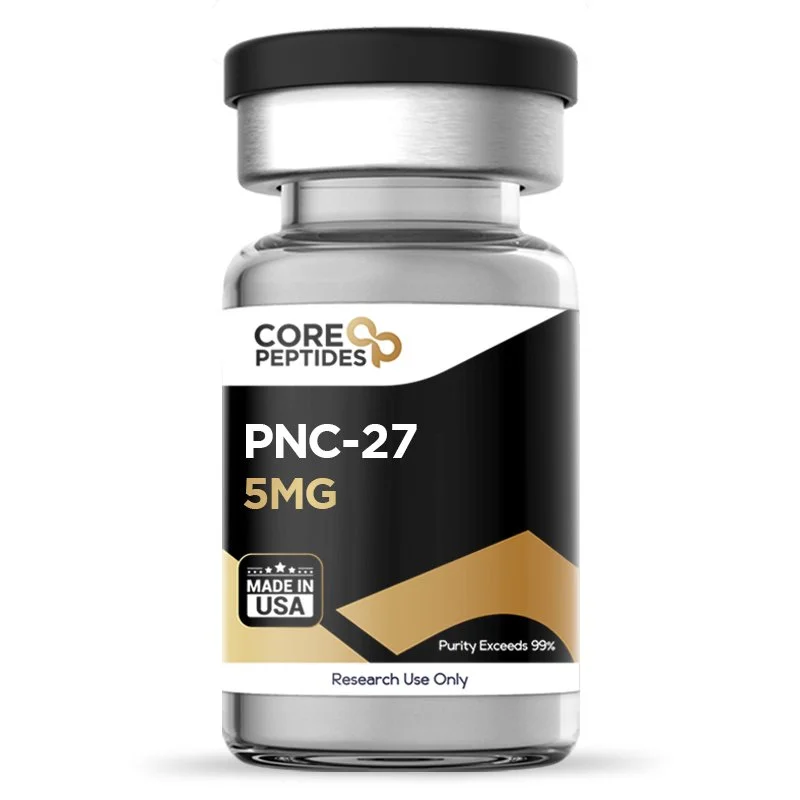
PNC-27 (5mg)
$138.00
Tamanho: 5mg
Conteúdo: PNC-27
Forma: Pó liofilizado
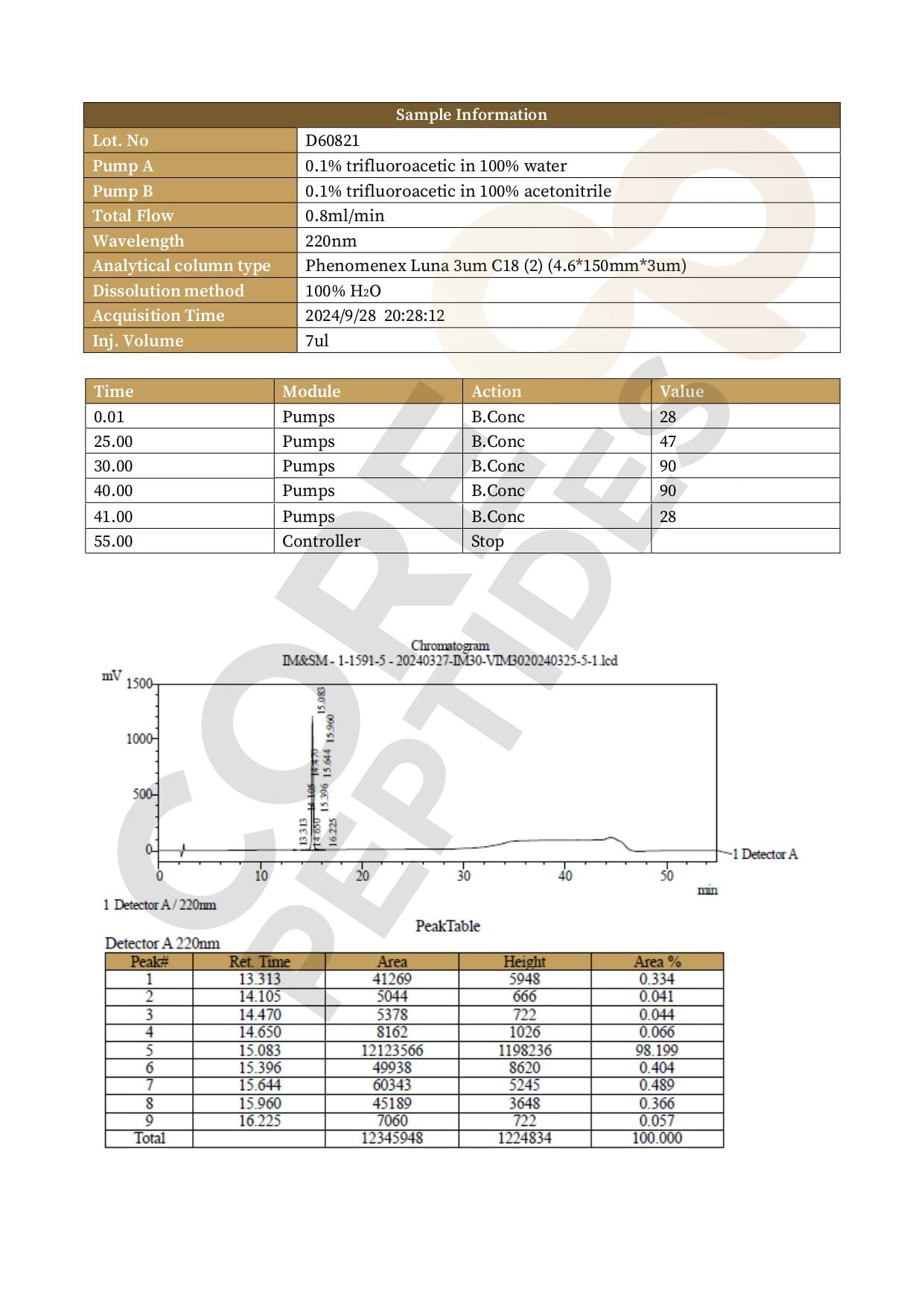
Pureza: >99%
SKU: PNC-27
Frete GRATUITO para pedidos acima de $ 200
Desconto por quantidade
| Quantidade | 5 - 8 | 9 + |
|---|---|---|
| Desconto | 5% | 10% |
| Preço | $131.10 | $124.20 |
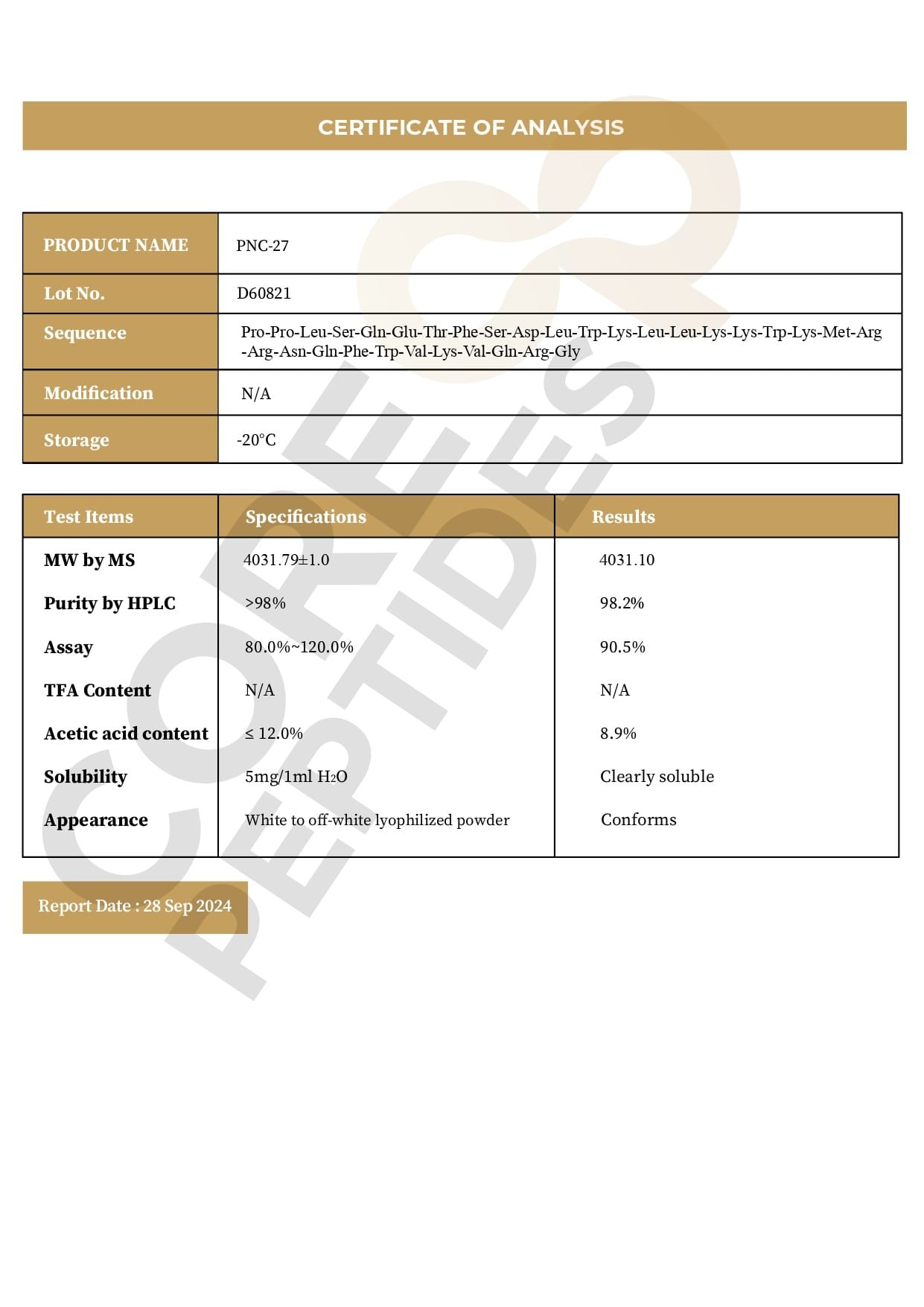
Peptídeo PNC-27
PNC-27 é um peptídeo de 27 aminoácidos que tem sido estudado por seu potencial para mitigar a atividade e a proliferação de células cancerígenas. É derivado da terceira hélice do segmento α-helicoidal do peptídeo anticâncer de p53 (ASPP2), uma proteína envolvida na supressão tumoral. Foi sugerido que o PNC-27 induz a morte celular por meio de necrose em várias linhagens de células cancerígenas, incluindo câncer de pâncreas, câncer de ovário e leucemia, entre outros.
Researchers speculate that the PNC-27 peptide may specifically target cancer cells while not appearing to interact with other cells. Initially synthesized in 2000 as a part of a research project associated with immunodeficiency, specifically HIV, this peptide was reported to exhibit the ability to bind with the double minute (HDM2) protein, which is deemed overly expressed on the membranes of the carcinogenic cells. Interestingly, PNC-27 does not appear to induce apoptosis, a common pathway for many anticancer research chemicals, but rather may act upon the cells via inducing necrosis. This mode of action suggests a direct, physical disruption of the plasma membrane, possibly mediated by the formation of pores that compromise cell integrity, leading to necrosis. More specifically, binding with this protein appears to perforate the membrane of cancer cells by forming holes and causing membranolysis. This allows for the influx of ions and the efflux of cellular contents, ultimately leading to cell death.(1)
Maquiagem Química(1)
Fórmula molecular: C188H293N53O44S
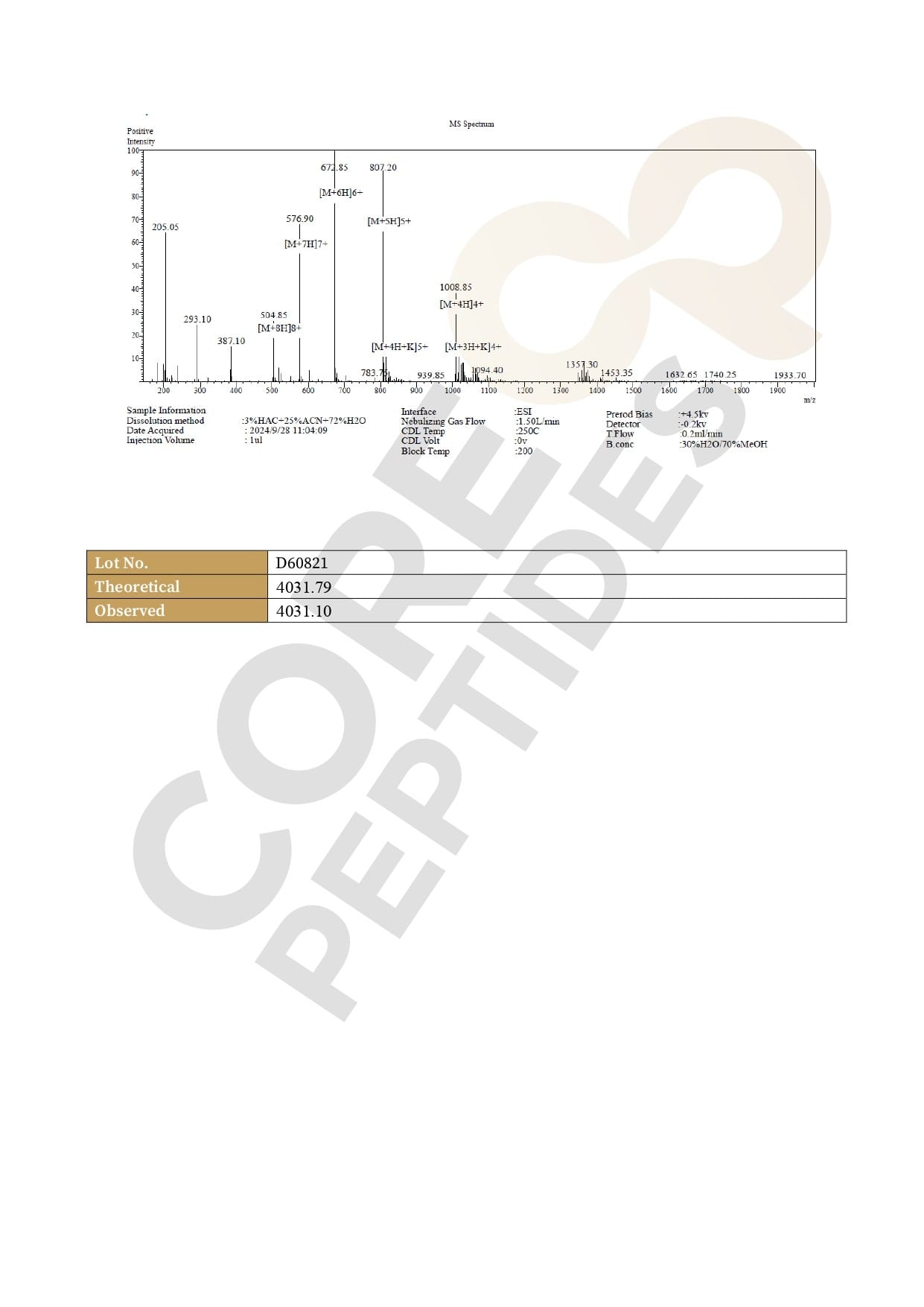
Peso molecular: 4031,7g/mol
Pesquisa e Estudos Clínicos
Peptídeo PNC-27 e morte celular seletiva
In 2009, a study aimed to evaluate whether the PNC-27 peptide may interact (and potentially induce necrosis) within non-cancerous cells. The researchers at the time believed that, based on the peptide structure, it might be able to bind with HDM-2 protein and interact singly with cancerous cells. HDM-2 protein is reportedly only present in cancerous cells. The study suggests that forming a 1:1 complex between PNC-27 and HDM-2 might be a key event in initiating the potential formation of transmembrane pores. The study employed theoretical and experimental approaches to understand the pore formation's interaction and structural basis. Conformational energy calculations indicated that PNC-27 might form stable complexes with HDM-2, possibly aligning the leader sequence to not interfere with the core interaction. Yet, it did appear to participate in the pore structure. Immuno-electron microscopy gave researchers visual data of these complexes at the cancer cell surface, with observed ring-shaped structures at the pore sites, which they speculated may contain PNC-27 bound to HDM-2. Importantly, these pore structures were not observed in normal cells exposed to PNC-27, underscoring the peptide's potentially selective toxicity towards cancer cells. Further, for this study, normal cells were implanted with HDM-2 protein. The PNC-27 peptide, which otherwise might not affect the cells, now showed affinity towards the modified cells.(2)
Peptídeo PNC-27 e lise de células cancerosas
Outro estudo(3) conducted in 2010 aimed at understanding whether fragments of the peptide or the entire peptide might impact the formation of membrane pores. The hypothesis was that if the peptide remained intact, it might more effectively induce the membranolytic activity necessary for killing cancer cells. For this study, the peptide was induced with a green fluorescence chemical to the terminal containing an amino group and a red fluorescence chemical to the terminal containing the carboxyl group. This labeling strategy was crucial as it allowed the researchers to visually track the integrity of the peptide within the cellular environment. The breast tumor and control cells were then exposed to the modified peptide to see which color appeared on the membrane during membranolysis. Half an hour after the peptide, a bright yellow luminescence was reported upon membrane lysis, suggesting that the peptide was fully intact during this cellular membrane-killing process. This observation was critical as it suggested that the peptide's structure was preserved during the interaction with the cell membrane, which would be essential for any cytotoxic activity. As expected, this was only seen in the cancerous cells while the control cells remained viable. The study's researchers suggest that the intact form of PNC-27 may be crucial for its activity, as the peptide appears to selectively induce pore formation in cancer cell membranes—a process associated with the release of lactate dehydrogenase (LDH), a marker of cell lysis. The interaction of PNC-27 with cancer cell membranes was suggested to increase over time, correlating with increased LDH release and cell death. Kelley A. Sookraj et al. stated,
"PNC-27 induces cancer cell membrane lysis by acting as the unmodified peptide, not fragments. The punctate yellow fluorescence is due to the interaction of PNC-27 with intramembrane targets of MCF-7 cells that do not exist in the membrane of the untransformed cell line. This interaction increases the lifetime of PNC-27. The absence of these targets in the membranes of the untransformed MCF-10-2A cells results in the initial uniform fluorescence of the double-labeled peptide in their membranes, after which the peptide is degraded." (3)
Peptídeo PNC-27 e células tumorais não sólidas
Em 2014, outro estudo(4) foi iniciado para determinar o potencial do peptídeo PNC-27 em células tumorais de tecido não sólido. Como mencionado no estudo, o objetivo foi “dupla: investigar se essas células também expressam HDM-2 em suas membranas plasmáticas e determinar se nosso peptídeo anticâncer induz necrose de células tumorais nessas células tumorais de tecido não sólido de uma maneira que depende da interação entre o peptídeo e HDM-2 ligado à membrana.”(4)
As células tumorais não sólidas foram expostas a PNC-27 e a acção examinada. Como parte do controlo, foram utilizadas células leucocitárias murinas. Após análise macroscópica, foi sugerido que as células HDM-2 foram expressas nas células tumorais de tecido não sólido e que o péptido PNC-27 parecia exibir potencial selectividade para estas células. A pesquisadora Katlin Davitt et al. afirmou:
"... Concluímos que a associação de PNC-27 com HDM-2 na membrana da célula cancerosa [pode] resultar na formação de poros transmembrana, o que resulta na morte de células cancerígenas, como descoberto anteriormente em uma série de diferentes células tumorais de tecido sólido. Como as células K562 não possuem expressão de p53, esses efeitos de PNC-27 nesta linha celular de leucemia [podem] ocorrer por uma via independente de p53." (4)
Peptídeo PNC-27 e células cancerígenas
Um estudo(5) foi conduzido no peptídeo PNC-28, que é estrutural e funcionalmente muito semelhante ao peptídeo PNC-27. Ambos os peptídeos são derivados do p53 e parecem atuar apenas nas proteínas HDM-2 nas células cancerígenas. Neste estudo, os pesquisadores avaliaram a atividade antitumoral do PNC-28 contra células de câncer de ovário e modelos de xenoenxerto de camundongos. Eles sugeriram que o PNC-28 parecia inibir o crescimento de células de câncer de ovário e reduzir o tamanho do tumor nos modelos de camundongos.
Em outro estudo de 2020,(6) foi realizada uma experiência para determinar o potencial do peptídeo PNC-27 em células não-tronco de linhagens celulares de leucemia. Os pesquisadores relataram que o estudo se concentrou em “Linhas celulares de leucemia mielóide aguda: U937, leucemia monocítica aguda; OCI-AML3, leucemia mielomonocítica aguda e HL60, leucemia promielocítica aguda.” Estas linhas celulares específicas foram selecionadas devido às suas características fenotípicas e genotípicas distintas, o que pode esclarecer o potencial variável do peptídeo em diferentes tipos de células cancerígenas. Após exposição ao peptídeo, observou-se que a proteína HDM-2 parecia ser altamente expressa em todas as células de leucemia, todas elas alvo do peptídeo PNC-27.(6)
O peptídeo PNC-27 está disponível apenas para fins de pesquisa e laboratório. Por favor, revise e siga nosso Termos e Condições antes de fazer o pedido.
Referências
- Davitt K, Babcock BD, Fenelus M, Poon CK, Sarkar A, Trivigno V, Zolkind PA, Matthew SM, Grin'kina N, Orynbayeva Z, Shaikh MF, Adler V, Michl J, Sarafraz-Yazdi E, Pincus MR, Bowne WB. O peptídeo anticâncer, PNC-27, induz necrose de células tumorais de uma linha celular de leucemia humana de tecido não sólido pouco diferenciada que depende da expressão de HDM-2 na membrana plasmática dessas células. Ann Clin Lab Ciência. Verão de 2014;44(3):241-8. PMID: 25117093. https://pubmed.ncbi.nlm.nih.gov/25117093/
- Sarafraz-Yazdi E, Mumin S, Cheung D, Fridman D, Lin B, Wong L, Rosal R, Rudolph R, Frenkel M, Thadi A, Morano WF, Bowne WB, Pincus MR, Michl J. PNC-27, um peptídeo quimérico de p53-penetratina se liga a HDM-2 em uma estrutura semelhante ao peptídeo p53, induz poros de membrana seletivos Formação e leva à lise de células cancerígenas. Biomedicamentos. 2022; 10(5):945. https://doi.org/10.3390/biomedicines10050945
- Sookraj KA, Bowne WB, Adler V, Sarafraz-Yazdi E, Michl J, Pincus MR. O peptídeo anticâncer, PNC-27, induz a lise das células tumorais como o peptídeo intacto. Quimioterápico Farmacêutico do Câncer. julho de 2010;66(2):325-31. doi: 10.1007/s00280-009-1166-7. Epub 2010, 25 de fevereiro. PMID: 20182728. https://pubmed.ncbi.nlm.nih.gov/20182728/
- Davitt K, Babcock BD, Fenelus M, Poon CK, Sarkar A, Trivigno V, Zolkind PA, Matthew SM, Grin'kina N, Orynbayeva Z, Shaikh MF, Adler V, Michl J, Sarafraz-Yazdi E, Pincus MR, Bowne WB. O peptídeo anticâncer, PNC-27, induz necrose de células tumorais de uma linha celular de leucemia humana de tecido não sólido pouco diferenciada que depende da expressão de HDM-2 na membrana plasmática dessas células. Ann Clin Lab Ciência. Verão de 2014;44(3):241-8. PMID: 25117093. https://pubmed.ncbi.nlm.nih.gov/25117093/
- Wilbur B. Bowne et al., A sequência de penetratina no peptídeo anticâncer PNC-28 causa necrose de células tumorais em vez de apoptose de células cancerígenas pancreáticas humanas, Annals of Surgical Oncology 15(12):3588–3600 Publicado por Springer Science+Business Media, LLC 2008 The Society of Surgical Oncology, Inc. 10.1245/s10434-008-0147-0. https://webs.iiitd.edu.in/raghava/cancerppd/refpdf/18931881.pdf
- Anusha Thadi et al, Targeting Membrane HDM-2 by PNC-27 Induces Necrosis in Leukemia Cells But Not in Normal Hematopoietic Cells, Anticancer Research 40 (9):4857-4867, setembro de 2020 DOI: 10.21873/anticanres.14488