


Cartalax (20mg)
$63.00
Tamanho: 20mg
Conteúdo: Cartalax
Forma: Pó liofilizado
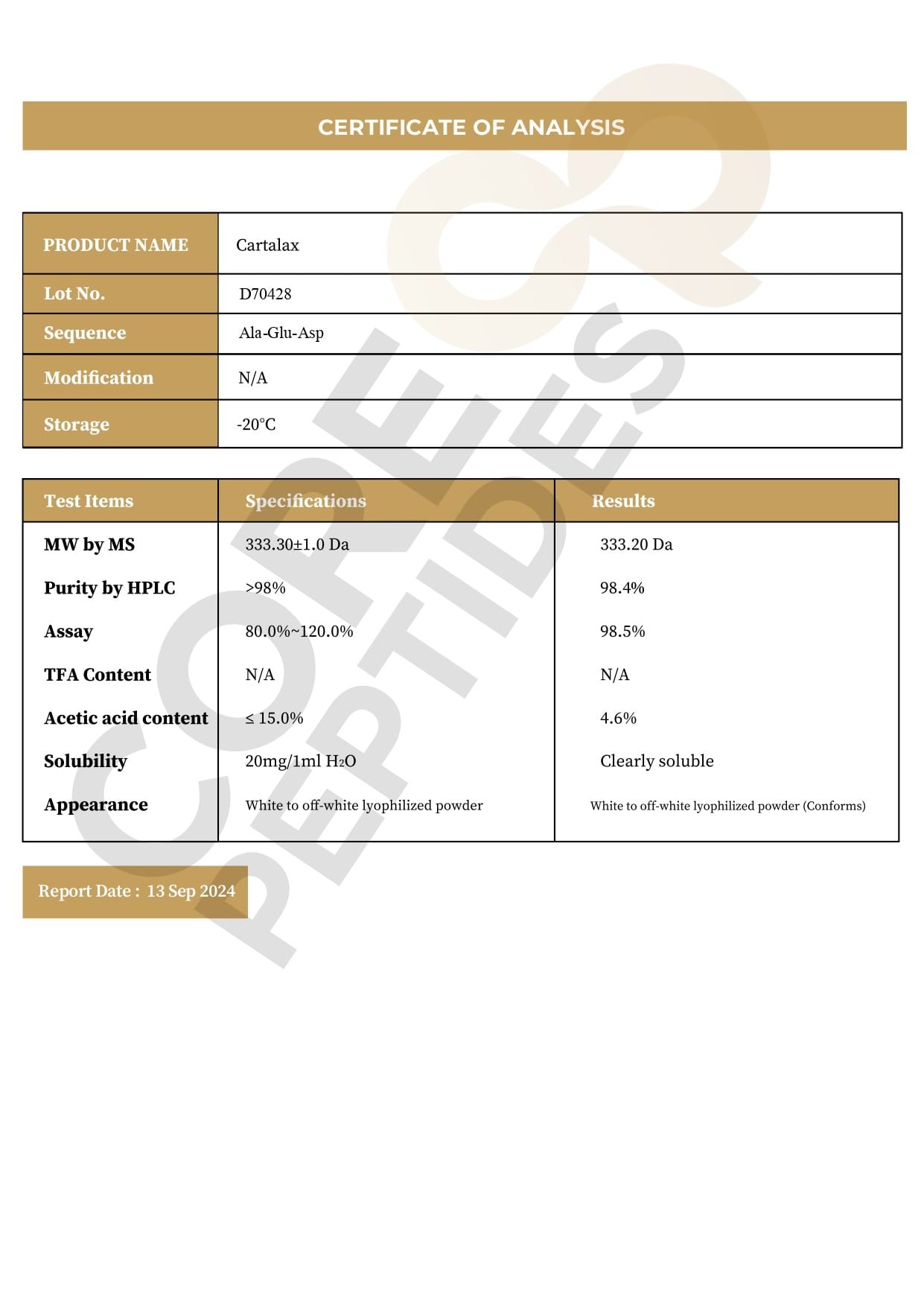
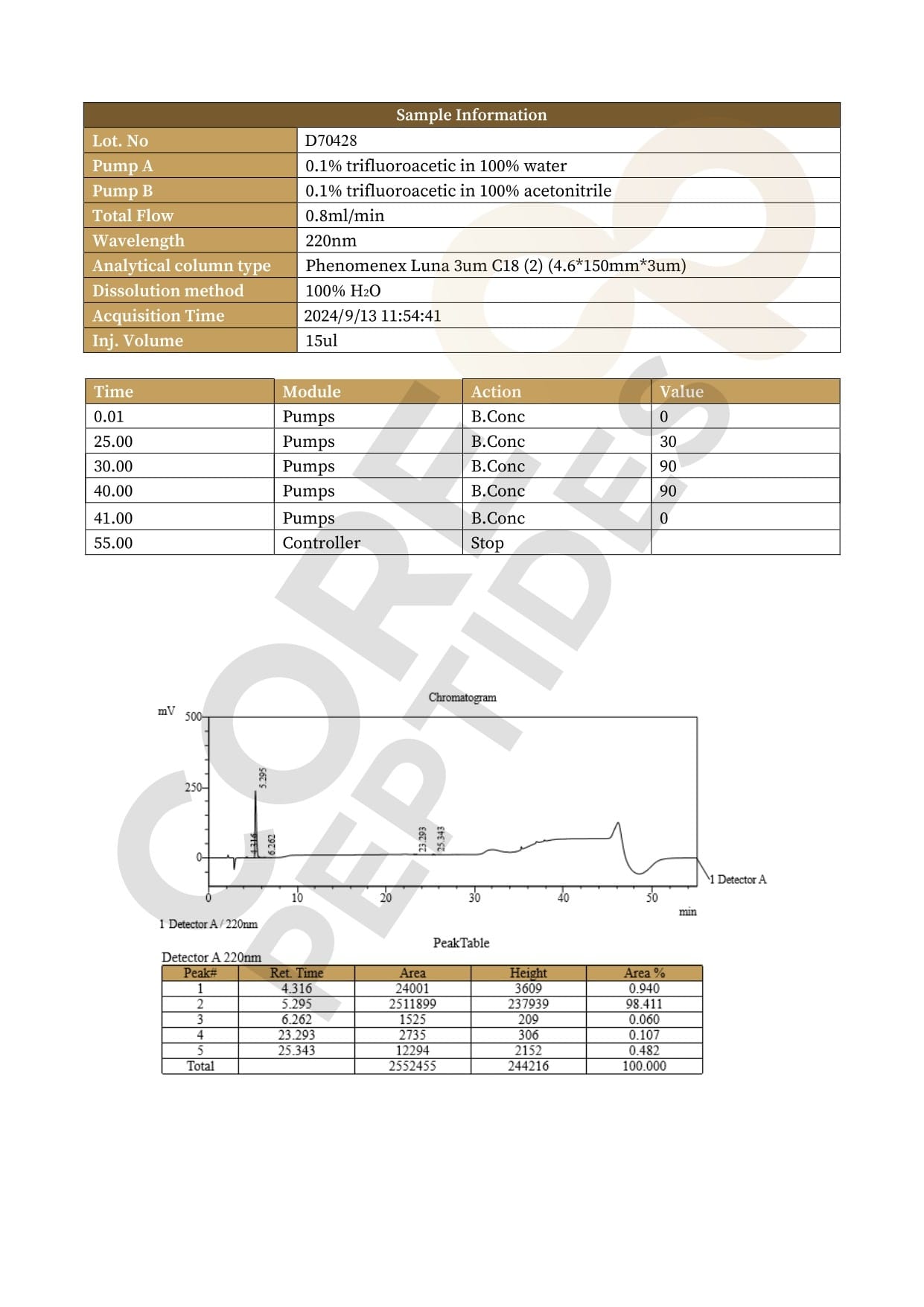
Pureza: >99%
SKU: P-CARLATAX-20
Frete GRATUITO para pedidos acima de $ 200
Desconto por quantidade
| Quantidade | 5 - 8 | 9 + |
|---|---|---|
| Desconto | 5% | 10% |
| Preço | $59.85 | $56.70 |
Peptídeo Cartalax
Cartalax, or AED or T-31 peptide, is a synthetic peptide designed to target specific biological pathways that may have implications in cellular aging. The peptide is based on the sequence of amino acids derived from the alpha-1 chain of type XI collagen (hence AED, standing for the amino acid sequence Alanine-Glutamate-Aspartate). It has also been isolated from kidney extracts containing polypeptides. Peptides like Cartalax are often investigated for their potential to modulate biological processes, including inflammation and cartilage repair, which are significant factors in osteoarthritis. More specifically, it is classified among the Khavinson peptides and has been suggested by researchers to act as a bioregulator.
Maquiagem Química
Fórmula molecular: C12H19N3O8
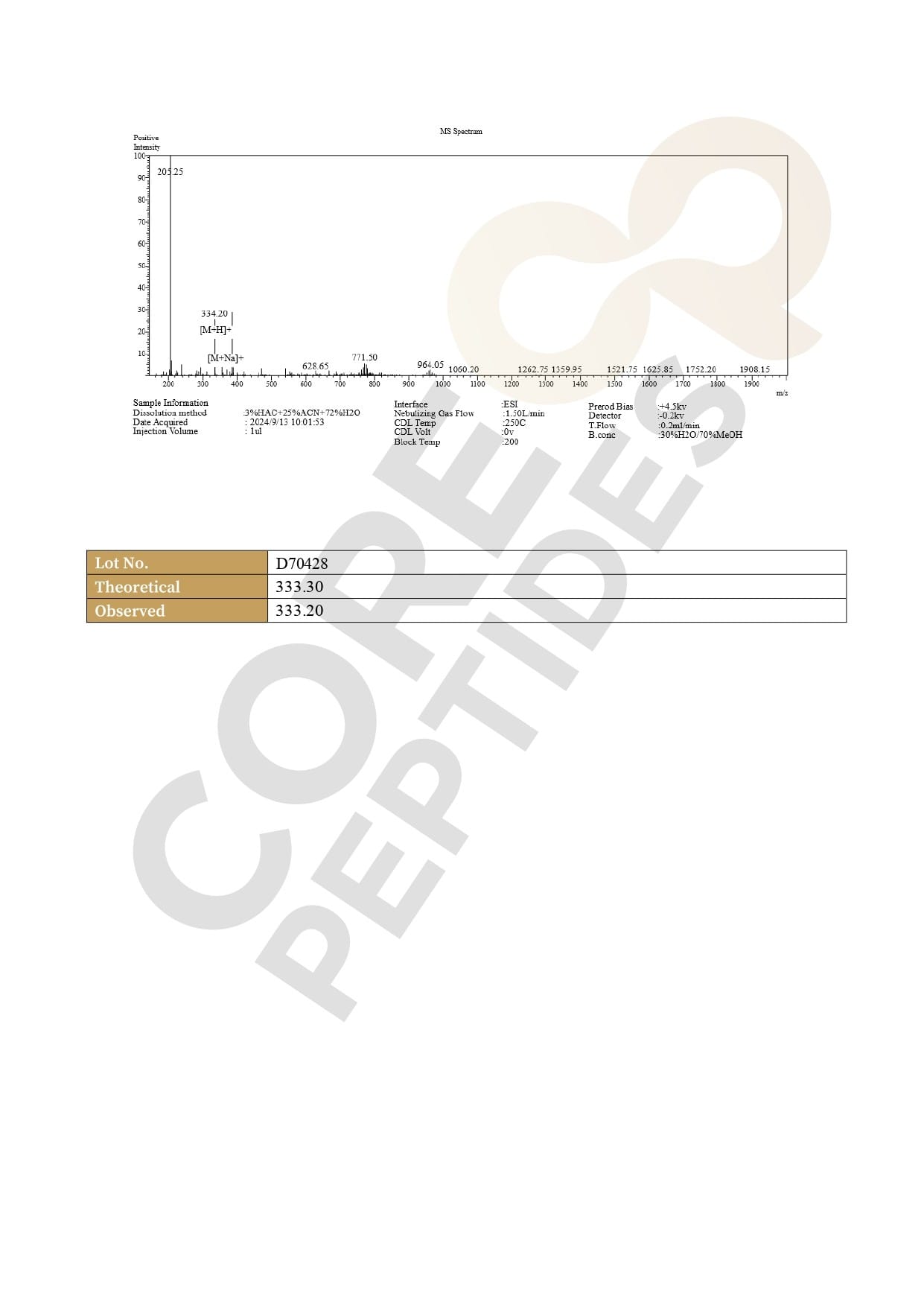
Peso molecular: 333,29g/mol
Sequência: Ala-Glu-Asp
Outros títulos conhecidos: DEA, T-31, SCHEMBL5324601
Pesquisa e Estudos Clínicos
Os dados aqui apresentados destilam as descobertas mais recentes de estudos pré-clínicos sobre o potencial do Cartalax, conforme evidenciado através de um espectro de estruturas experimentais.
Cartalax e fibroblastos
O peptídeo Cartalax, quando explorado por seus impactos nos fibroblastos da pele, parece possuir propriedades que podem potencialmente influenciar o processo de envelhecimento dessas células em cultura.(1) Cartalax has been suggested to potentially play a role in several critical cellular processes that are pivotal for fibroblast function and longevity. Firstly, Cartalax may contribute to the proliferation of fibroblasts, as suggested by its potential enhancement of Ki-67 expression. Ki-67 is a well-known marker associated with cell proliferation. The expression of Ki-67 typically decreases during the aging of fibroblasts in culture. The fact that Cartalax seemingly promotes the levels of Ki-67 implies that this peptide may encourage fibroblast growth or increase their replicative lifespan, potentially combating the natural decline in cell division over time.
Additionally, the apparent action of Cartalax on the expression of CD98hc is noteworthy. CD98hc is implicated in the regeneration and aging processes of cells. The increased expression of CD98hc in the presence of Cartalax may suggest a role in enhancing the regenerative capacity or possibly sustaining the vitality of aging fibroblasts. By promoting the expression of CD98hc, Cartalax may help maintain cellular functions that usually wane as cells age. The study also indicates that Cartalax potentially suppresses caspase-3 activity, which indicates its potential to inhibit apoptosis (cell death).
Apoptosis, the programmed cell death that is a natural part of an organ's renewal and homeostasis, may be detrimental when excessive or dysregulated. During the aging of cell cultures, an increase in apoptosis, or programmed cell death, is common. Cartalax's apparent suppression of caspase-dependent apoptosis could suggest that this peptide may allow fibroblasts to avert the increased incidence of cell death associated with aging, potentially contributing to an extended cellular lifespan. Moreover, the researchers commented that the peptide “reduziu o nível de apoptose em culturas jovens e envelhecidas.”
Observou-se também que Cartalax inibe a síntese de MMP-9. A MMP-9 é uma enzima envolvida na remodelação da matriz extracelular e seu aumento de atividade está frequentemente associado ao envelhecimento dos fibroblastos. Ao inibir a síntese de MMP-9, Cartalax pode ajudar a preservar a integridade da matriz extracelular, possivelmente prevenindo ou atenuando as alterações degenerativas que normalmente ocorrem com o envelhecimento.(1)
Ultimately, Cartalax has been suggested to regulate several markers in this replicative aging murine model of skin fibroblasts, such as Ki67 (a protein associated with proliferation), CD98hc (a glycoprotein), Caspase-3 (an apoptosis marker), and MMP9 (an enzyme involved in the degradation of extracellular matrix). Since chondrocytes (cartilage cells) share structural and functional characteristics with fibroblasts, these findings might suggest that Cartalax could have reparative properties in cartilage tissues as well.(2)
Cartalax e células renais
The peptide Cartalax may carry the potential to influence kidney cell regeneration favorably. This influence is posited upon observations in organotypic kidney tissue cultures taken from both young and older murine models, where the presence of Cartalax was associated with a promotion of cellular proliferation. This proliferative action was apparently indicated by an increased expression of the marker Ki-67, which is commonly used to gauge cell proliferation. Furthermore, Cartalax may also contribute to a decrease in apoptotic processes within the kidney cells. The peptide Cartalax appears to potentially mitigate this by reducing the expression of the proapoptotic peptide p53. This protein, when expressed in high levels, is suggested to facilitate the process of apoptosis, and its down-regulation by Cartalax suggests that the peptide might help maintain cellular integrity and prolong cell survival. Thus, the presented information in this study also suggests Cartalax as a molecule of interest for its potential in the aging process of kidney cells.(3)
Other studies, such as another trial in aging renal cell cultures, further elaborated this suggestion. The study in question suggested that Cartalax may have an impact by promoting cell proliferation and possibly modifying the expression of several critical markers associated with aging. Specifically, the peptide is suggested to potentially decrease the expression of aging markers such as p16, p21, and p53, which are proteins frequently linked to the advancement of cellular senescence—the state in which cells stop dividing and growing.
Beyond the suppression of these markers, Cartalax is also suggested to potentially increase the expression of SIRT-6, a protein that plays a significant role in DNA repair and in maintaining genomic stability, known to wane with age. The promotion of SIRT-6 by Cartalax might contribute to slowing down the aging process in renal cells, as a reduction in SIRT-6 is implicated in the acceleration of cellular aging. The study further suggests that the protective actions of Cartalax on kidney cells may be attributable to the peptide's interactions with DNA. It appears that Cartalax may form energetically favorable complexes with specific sequences of DNA, particularly d(ATATATATAT)2 in the minor groove. This interaction is hypothesized to be a catalyst for the changes observed in gene expression, including those genes that code for aging markers in renal cells. By potentially affecting gene expression, Cartalax might aid in preserving the health and function of kidney cells, possibly delaying aging. The development of experimental data models to understand the interaction between Cartalax and DNA sequences emphasizes the intricacies of the underlying mechanisms. The proposition that this interaction may cause gene expression changes offers a novel insight into how particular peptides might influence the aging process at the molecular level.(4)
Cartalax e o envelhecimento celular
Apart from its potential on fibroblasts and kidney cell cultures, Cartalax has also been researched on its potential impact on bone marrow mesenchymal stem cells. More specifically, the peptide Cartalax could potentially exert a notable influence on the cellular mechanisms related to aging in bone marrow mesenchymal stem cells, based on observations from a study examining gene expression levels in cells that are undergoing an aging process in two distinct environments: "passages" or during their proliferation phase, and "stationary" or non-proliferating conditions. As cells age, they go through various stages, often described as "passages" in cell culture, which denote the number of times the cells have been divided and subcultured. Eventually, cells enter a "stationary" phase of growth, commonly associated with cellular senescence, where they no longer divide but are still metabolically active. This phase may reflect the aging process of cells.
Cartalax might play a role in the upregulation of the insulin-like growth factor 1 (IGF1) gene in both aging models, potentially enhancing its expression by approximately 3.5 to 5.6 fold. The IGF1 protein is known for its involvement in cellular growth and development, and its increased expression might suggest a role for Cartalax in promoting growth-related cellular functions, which could possibly counteract certain aspects of the cellular aging process. The study also noted an eightfold increase in the expression of the TERT gene, which encodes the catalytic subunit of the enzyme telomerase, in "stationary" aging conditions. However, the text provided does not specify the action of Cartalax on TERT expression. Since telomerase plays a crucial role in maintaining telomere length and thus cellular longevity, any potential modulation by Cartalax might have significant implications for cellular aging. Further, Cartalax appeared to stimulate the expression of the NFκB gene in both aging models. NFκB is a protein complex that functions in various cellular processes, including inflammation, immunity, and cellular survival. The stimulation of NFκB by Cartalax could imply a potential influence on the cellular stress response pathways, which are intimately linked to the aging process. Further, the authors commented that the “O peptídeo não afeta o TNKS2 em “passagens”, mas o inibe na cultura de envelhecimento “estacionária”.” TNKS2 refere-se a "Tankyrase 2", que é um membro da família de enzimas poli (ADP-ribose) polimerase (PARP). Tankirases, incluindo TNKS2, desempenham um papel crucial em vários processos celulares, como regulação da sinalização Wnt, manutenção de telômeros e regulação do tráfego de vesículas. Particularmente, acredita-se que o papel de manutenção dos telômeros medeie o potencial impacto anti-envelhecimento da interação entre Cartalax e TNKS2.(5)
O peptídeo Cartalax está disponível apenas para fins de pesquisa e laboratório. Por favor, revise e siga nosso Termos e Condições antes de fazer o pedido.
Referências:
- Lin'kova, NS, Drobintseva, AO, Orlova, OA, Kuznetsova, EP, Polyakova, VO, Kvetnoy, IM, & Khavinson, VK h (2016). Regulação peptídica das funções dos fibroblastos da pele durante o envelhecimento in vitro. Boletim de biologia experimental e medicina, 161(1), 175–178. https://doi.org/10.1007/s10517-016-3370-x
- Linkova, N., Khavinson, V., Diatlova, A., Myakisheva, S., & Ryzhak, G. (2023). Regulação peptídica da diferenciação de células-tronco condrogênicas. Revista Internacional de Ciências Moleculares, 24(9), 8415.
- Chalisova, NI, Lin'kova, NS, Nichik, TE, Ryzhak, AP, Dudkov, AV, & Ryzhak, GA (2015). Regulação peptídica de processos de renovação celular em culturas de tecidos renais de animais jovens e idosos. Boletim de biologia experimental e medicina, 159(1), 124–127. https://doi.org/10.1007/s10517-015-2906-9
- Khavinson, VKh, Tarnovskaia, SI, Lin'kova, NS, Poliakova, VO, Durnova, AO, Nichik, TE, Kvetnoĭ, IM, D'iakonov, MM, & Iakutseni, PP (2014). Avanços na gerontologia = Uspekhi gerontologii, 27(4), 651–656.
- Ashapkin, V., Khavinson, V., Shilovsky, G., Linkova, N., & Vanuyshin, B. (2020). Expressão gênica em culturas de envelhecimento de células-tronco mesenquimais humanas: modulação por peptídeos curtos. Relatórios de biologia molecular, 47(6), 4323–4329. https://doi.org/10.1007/s11033-020-05506-3